Home, Art & Family · Art · Fashion · A Runway in Rodin's Garden: The Hôtel Biron and Dior Winter 2026-2027
Art · Fashion · Feature
A Runway in Rodin's Garden: The Hôtel Biron and Dior Winter 2026-2027
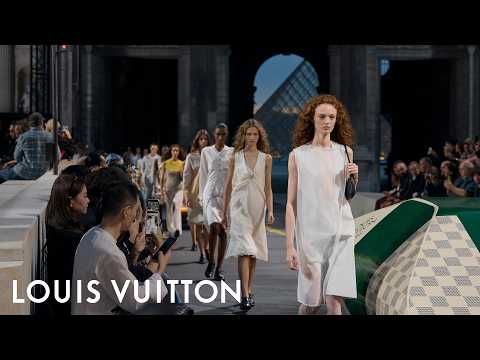
The Musée Rodin's grounds hosted the featured film, Christian Dior's “Winter 2026-2027 Show,” an 8-minute video published January 21, 2026. The video's notes say “the Dior aristo-youth emerges”: precise tailoring, exuberant detail and a blurred line between masculine and feminine, under creative direction by Jonathan Anderson, with music including Mk.gee. This article looks at the Paris mansion behind the runway and at what critics saw on it.
This film could not be played here. The player failed to load, or the channel may have changed its embed settings.
Video by Christian Dior · Paris, France, Europe · 8:00 · 2026-01-21. Embedded from YouTube as the featured film for this article. Home, Art & Family does not host the file.
A tent behind the museum
Writing for The Cut, Cathy Horyn reported that Anderson's second men's collection for Dior was shown in a tent behind the Musée Rodin, its walls draped in Dior gray fabric. The setting was apt for a collection about the past remade. The museum, opened in 1919, is primarily dedicated to the sculptor Auguste Rodin and occupies the Hôtel Biron and its grounds in central Paris, with a second site at Rodin's old home, the Villa des Brillants in Meudon.
The financier's mansion
The Hôtel Biron, at 77 rue de Varenne in the 7th arrondissement, was built from 1727 to 1732 to designs by the architect Jean Aubert. Its first owner, Abraham Peyrenc de Moras, was a financier who had speculated successfully in John Law's ill-fated paper money schemes, at a time when the Faubourg Saint-Germain was still suburban. Unusually, the house was built free-standing, and it is still surrounded by three hectares of grounds. It had rococo boiseries, two elliptical salons and sixteen overdoor paintings by François Lemoyne, premier peintre du roi.
Duchess, marshal and revolution
Peyrenc died a year after completion, and his widow leased the house to the duchesse du Maine, who had married a natural son of Louis XIV. On her death in 1753 it passed to the maréchal de Biron, hero of Fontenoy, whose name it carries; his heir swept the formal gardens away in favour of an English-style park with trelliswork that visitors called one of the wonders of Paris. That heir, the duc de Lauzun, was guillotined in 1793, and under Napoleon the mansion housed the Papal legate and then the Russian ambassador.
From convent school to Rodin's studio
In 1820 the house was given to the Société du Sacré-Coeur de Jésus, whose nuns turned it into a boarding school for girls from aristocratic families. They stripped it of mirrors and boiseries and added a chapel. After the 1905 law on the separation of Church and State forced the school to close, the house was subdivided into lodgings and threatened with demolition. Rodin rented ground-floor rooms to store his sculptures; they became his studio, where he worked and entertained friends among the overgrown gardens.
Rodin's bargain
From 1909, at the height of his fame, Rodin agitated for the house to become a museum of his work. He proposed to give his sculptures, archives and the paintings he had acquired by Van Gogh, Monet and Renoir to the state. In 1916 the French Assembly passed a law accepting the donations and allocated the mansion and garden to a museum, which opened on 4 August 1919. Since then it has bought back lost boiseries and two of Lemoyne's overdoors, and in 1993 the landscape architect Jacques Sgard replanted the gardens, where The Thinker, The Kiss, The Gates of Hell and The Burghers of Calais stand. A Camille Claudel room honours Rodin's student, collaborator and lover.
What reviewers saw
Horyn wrote that Anderson's initial spark was a 1922 dress by Paul Poiret, two rectangles of metallic silk jacquard that Anderson called “antithetical to Dior,” who favoured romance, big skirts and flowers. The opening looks paired sequinned sleeveless tops with slim jeans; she picked up echoes of Jean Paul Gaultier and Martin Margiela, and praised tailored suits with wide 1940s lapels. She found the collection more relaxed than his debut, though she felt it lost momentum in the second half. “Dior was about ideas, Raf was about ideas,” Anderson told her, referring to Raf Simons. Horyn's verdict was that Anderson has not yet sorted out a clear point of view, but that he will get there.
Watching the film
Watch the show with the house in mind. A mansion built on speculation, emptied by revolution and stripped by nuns, then refilled by an artist, is a fitting backdrop for a designer remaking a dress from 1922.
Questions and answers
Where was the Dior Winter 2026-2027 men's show held?
According to The Cut, in a tent behind the Musée Rodin in Paris, its walls draped in Dior gray.
What is the Hôtel Biron?
An 18th-century Paris mansion at 77 rue de Varenne, built 1727 to 1732, that has housed the Musée Rodin since 1919.
How did Rodin get the Hôtel Biron?
He rented rooms there as a studio and offered his collection to the state, which accepted in 1916.
Who designed the collection?
The video's notes credit creative direction to Jonathan Anderson.
Sources
Facts about the topic come from the sources below, checked when this article was written. Details about the film come only from its published title, credit, runtime, date and channel notes.
- thecut.com https://www.thecut.com/article/dior-mens-fall-2026-cathy-horyn-review.html
- en.wikipedia.org https://en.wikipedia.org/wiki/H%C3%B4tel_Biron
- en.wikipedia.org https://en.wikipedia.org/wiki/Mus%C3%A9e_Rodin
From the channel
The Dior aristo-youth emerges: precise tailoring, exuberant detail and a blurred line between masculine and feminine. Creative Direction Jonathan Anderson Styling Benjamin Bruno Make-up Peter Philips Hair Guido Palau Manicure Ama Quashie Casting Ashley Brokaw Movement Direction MJ Harper Production / Direction La Mode en Images Show coordination Holmes Production Music Frédéric Sanchez…
This is the description published with the film on YouTube, excerpted here.