Home, Art & Family · Art · Culinary Arts · The Man Who Cooks Biryani for 300 People on the Mumbai Streets
Art · Culinary Arts · Feature
The Man Who Cooks Biryani for 300 People on the Mumbai Streets
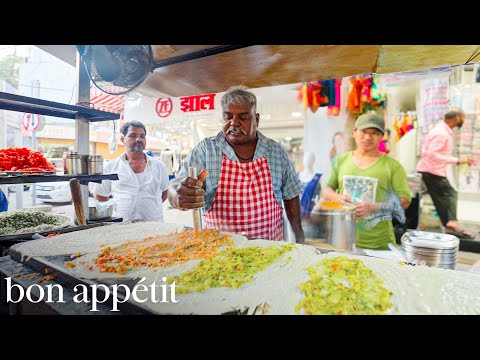
Biryani for 300 people is the promise in The Man Who Cooks Biryani for 300 People on the Mumbai Streets, a 14-minute, 5-second Street Eats film from Bon Appetit published on April 3, 2025, in which the magazine joins chef Meherwan Irani at Hotel Theresa in Mumbai to try, as the channel puts it, the city's most famous biryani.
This film could not be played here. The player failed to load, or the channel may have changed its embed settings.
Video by Bon Appétit · Mumbai, India, Asia · 14:05 · 2025-04-03. Embedded from YouTube as the featured film for this article. Home, Art & Family does not host the file.
A stall that grew into a street operation
Bon Appetit's published page, which includes a full transcript, says Hotel Theresa has been serving biryani to locals for fifteen years, growing from a small lunch service next to a tea stall into a street-food operation now able to serve 300 people from one pot. In the film Irani puts a number on the morning's work: the chef is going to feed 300 people in two hours, making 80 pounds of biryani in the pot on the street.
The chef, whose speech is labelled Saifi in that transcript, moved to Mumbai from Tamil Nadu 15 years ago. He began with a tiny tea stall and a lunch service on a bench beside it. The masala, Irani says, is his own, a Tamil Nadu biryani masala whose basic ingredients include red chili powder.
Dharavi, and how densely it is lived in
Irani opens by placing the stall in Bombay, one of the greatest food cities on the planet, and in Dharavi, which he describes as having more than a million people per square mile. Wikipedia's page on Dharavi supports the scale, with slightly different figures: an area of just over 2.39 square kilometres, a population of about a million, and a density of over 418,410 people per square kilometre, or about 1,083,677 per square mile, making it one of the most densely populated areas in the world.
The same page says Dharavi has often been considered one of the world's largest slums, founded in 1884 during the British colonial era. Irani, in the transcript, uses the word slum and then pushes back on the usual picture of one. This article follows the sources and does not treat the neighbourhood as a backdrop only.
Oil, whole spices and a pot on the street
The work begins with what Irani calls the ceremonial lighting of the fire. The fat is sesame oil, which he says he has never seen used this way in biryani, plus pure cow's-milk ghee. Whole spices go into that oil: cinnamon, bay leaves, and dagad phool, a rock lichen whose name, he says, means stone flower, literally scraped off rocks.
Then come the onions, in a quantity Irani puts at five gallons, with green chilies. The chef, he says, will not stop stirring for about 45 minutes, because the onions must reduce without burning. The flavour of a biryani, Irani tells the camera, is the frying of the onions; most people think it is the meat and the masala, but it is those caramelized onions, sweet and flecked throughout, that do the work. Don't skimp on the onions, he says.
Ginger, garlic, mint, and no shortcuts
Ginger-garlic paste goes in next, mixed 50-50, because garlic alone burns and ginger alone turns fibrous. Irani describes the chef constantly bringing the paste over the hotspot in the middle of the pot and then out to the side, since a pot this size does not heat evenly. You cannot shortcut this process, he says; the longer it cooks, the more flavour you build. About two gallons of mint go in, and a copious amount of cilantro.
It is 9:30 in the morning in the film, and Irani guesses service will start around 11. The stall is on the street because, as he puts it, there is no kitchen that can handle something of this volume, and the cooking is also an advertisement for everyone going by.
Where this plate sits in the wider dish
Wikipedia describes biryani as a mixed rice dish traditionally made with spiced meat, seafood or vegetables, thought to derive from a Persian rice dish, either pilau or birinj biryan, combining slow-cooking with yoghurt-marinated meat and a spicy Indian style. It is one of the most popular dishes in South Asia, often associated with several regional styles.
Hotel Theresa's version, in the film, is framed as a Tamil Nadu biryani in Mumbai, not as a Bombay or Hyderabadi plate. That is Irani's and the cook's account, and it is the reason the masala and the sesame oil are worth paying attention to. The film is not a general history of the dish; it is one pot, on one street, cooked the way this chef has done it for 15 years.
A Street Eats visit, not a recipe card
The episode is part of Bon Appetit's Street Eats series, and the published page is dated 3 April 2025. Irani is there as a guide and a chef himself, talking through a method he clearly admires. The quantities are the ones spoken on camera, not a tested recipe from the magazine's kitchen.
What the sources agree on is the scale and the place: hundreds of portions from a single pot, in Dharavi, from a cook who started beside a tea stall. Wikipedia supplies the neighbourhood's density and the dish's longer history. The film supplies the morning's work.
Questions and answers
Where is the biryani in this film cooked?
At Hotel Theresa in Dharavi, Mumbai, where Bon Appetit visits with chef Meherwan Irani.
How many people does the pot serve?
The channel and the transcript both say 300 people from one pot; Irani also says 80 pounds of biryani, to be served in about two hours.
Who is the cook?
The published transcript labels his speech as Saifi. He moved from Tamil Nadu 15 years ago and began with a tea stall and a small lunch service.
What is unusual about this biryani's fat?
Irani says the cook uses sesame oil as well as ghee, a combination he had not seen in biryani before.
Sources
Facts about the topic come from the sources below, checked when this article was written. Details about the film come only from its published title, credit, runtime, date and channel notes.
- bonappetit.com https://www.bonappetit.com/video/watch/street-eats-1-pot-300-servings-tasting-mumbais-best-biryani
- en.wikipedia.org https://en.wikipedia.org/wiki/Biryani
- en.wikipedia.org https://en.wikipedia.org/wiki/Dharavi
From the channel
Today, Bon Appétit joins chef Meherwan Irani in Mumbai at Hotel Theresa to try the city’s most famous biryani. Hotel Theresa has been serving biryani to the locals for fifteen years, growing from a small lunch service next to a tea stall to a full-blown street food operation, now able to serve 300 people from one pot. Want Bon Appétit shirts, hats and more? https://shop.bonappetit.com/?utm_source=youtube&utm_brand=ba&utm_campaign=aud-dev&utm_medium=video&utm_content=merch-shop-promo Still haven’t subscribed to Bon Appétit on YouTube? ►► http://bit.ly/1TLeyPn Want more Bon Appétit in your life? Subscribe to the magazine! https://bit.ly/313UWRu ABOUT BON APPÉTIT …
This is the description published with the film on YouTube, excerpted here.